Best Water Filters for Lead Removal 2026
Lead in drinking water has no safe level - the EPA's action level is 15 parts per billion, but the CDC states there is no known safe level of lead exposure for children. The filters on this list are verified against NSF 53 or NSF 58 certification data, the two standards that independently confirm lead removal. Not all filters that claim lead removal are certified. We only list those that are.
NSF 53 certifies that a filter reduces lead at the point of use. NSF 58 certifies reverse osmosis systems, which also remove lead. A filter claiming "lead reduction" without NSF 53 or 58 certification has unverified performance claims.
Brita Standard filters carry only NSF 42 - which covers taste and odor only, not lead. If you are buying a filter specifically for lead, NSF 53 or NSF 58 is the minimum requirement.
- Best overall (pitcher): Clearly Filtered Pitcher - NSF 42, 53, 244 - removes lead, PFAS, fluoride
- Best under-sink RO: APEC ROES-50 - NSF 58 - removes 99%+ lead, PFAS, fluoride
- Best under-sink carbon: Aquasana Claryum 3-Stage - NSF 42, 53, 401 - no tank
- Not recommended: Brita Standard - NSF 42 only, does NOT remove lead

- The only pitcher in our catalog that lists fluoride reduction
- Also removes PFAS, lead, arsenic
- Zero installation
- Lower fluoride reduction than RO
- Filter every 100 gallons
- Slower flow than RO tap
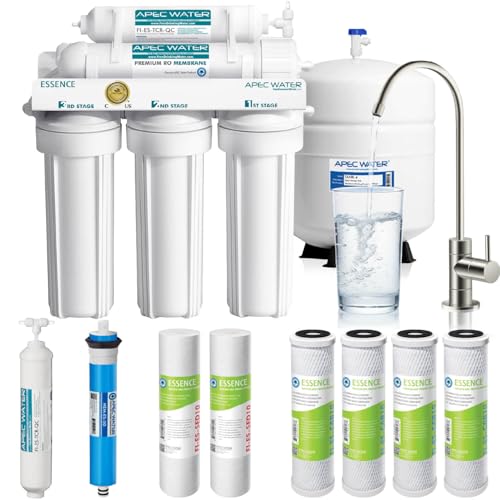
- USA assembled - domestic parts availability
- Tank-based, works without a pump
- Reduces PFAS, fluoride, lead, arsenic
- Tank-based only - no tankless option
- 50 GPD - slower than Waterdrop (600-800 GPD)
- 3-4:1 drain ratio - water waste
- No remineralization on the base ROES-50 (PH75 adds it)

- Reduces PFAS, lead, pharmaceuticals
- No storage tank - instant flow
- Zero water waste - no RO membrane
- Does NOT remove fluoride
- Does NOT remove arsenic or nitrates
- Requires drilling for dedicated faucet
- Filter replacement every 6 months

- Low upfront cost
- 27-cup capacity - large family size
- Easy filter replacement
- Carbon filter for taste and odour, not for health contaminants
- Does NOT remove PFAS
- Does NOT remove lead
- Does NOT remove fluoride
- Filter lasts only 40 gallons
Full comparison - lead removal, 2026
| Model | Lead (NSF) | PFAS | Fluoride | Type | Annual cost | Buy |
|---|---|---|---|---|---|---|
| Clearly Filtered Pitcher | NSF 53 | Yes | Yes | Pitcher | Budget | Check price on Amazon ↗ (paid link) |
| APEC ROES-50 | NSF 58 | Yes | Yes | Under-sink RO | Mid | Check price on Amazon ↗ (paid link) |
| Aquasana Claryum 3-Stage | NSF 53 | Yes | No | Under-sink | Mid | Check price on Amazon ↗ (paid link) |
| Brita UltraMax | Not certified | No | No | Pitcher | Budget | NSF 42 only |
FAQ
What NSF certification do I need for lead removal?
Does Brita remove lead?
How do I know if my water has lead?
Can boiling water remove lead?
Buying direct from the brand
Some of the makers on this page also sell the same systems on their own sites and run their own affiliate programs. We earn a commission from those links too, at no extra cost to you. Prices, bundles and warranty terms can differ from Amazon, so compare both before you buy.