Best Well Water Filters 2026
Well water is unregulated - unlike municipal water, it receives no treatment and no government testing. That means iron, bacteria, sediment, nitrates, and hardness minerals can be present at levels that damage appliances and affect health. Test your well before buying anything: the filters below cover different combinations of contaminants, and none of them substitute for a lab test.
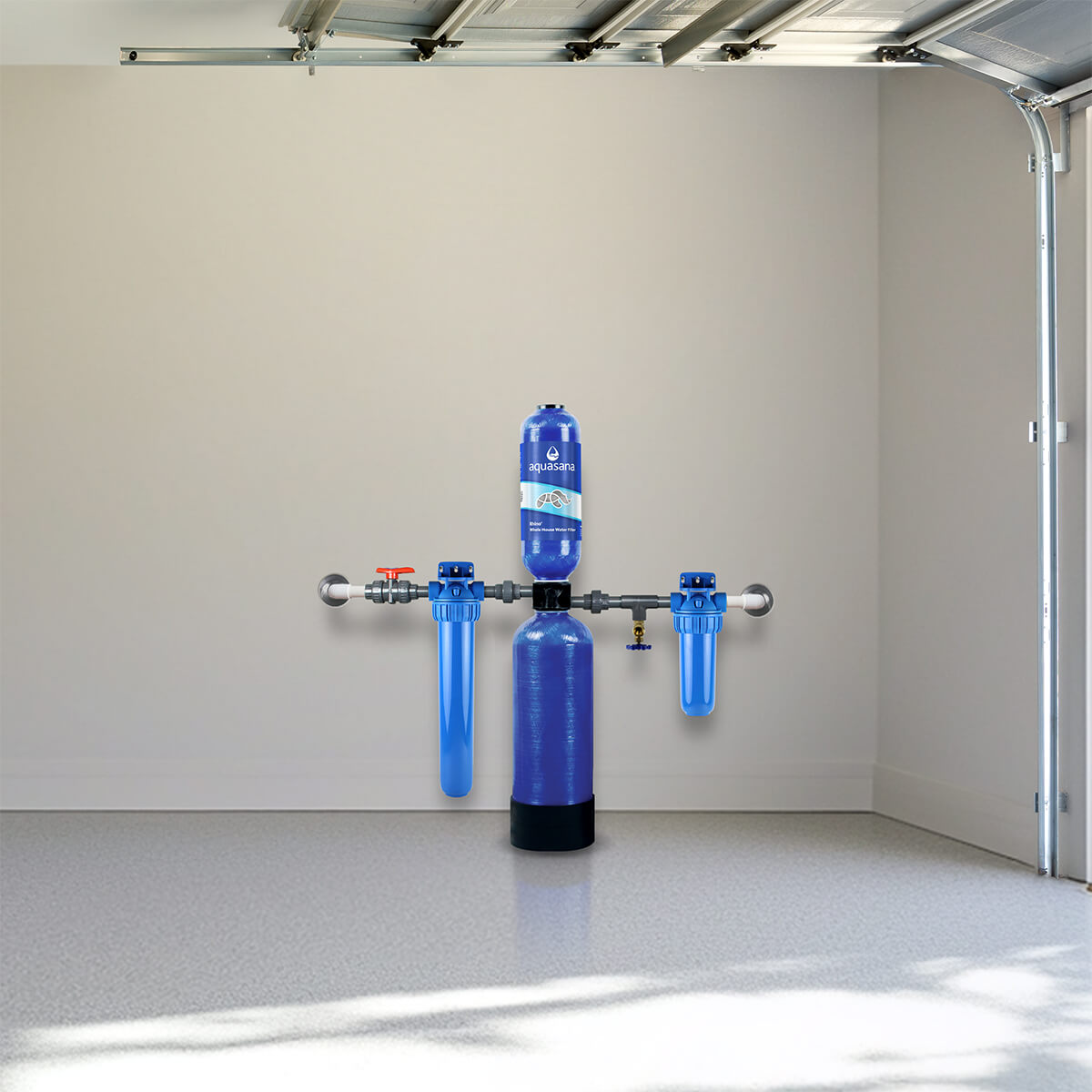
- Our pick: Aquasana Rhino EQ-1000 - salt-free, whole house, ~1,000,000 gal capacity Check price on Amazon ↗ (paid link)
- Best for iron & manganese: iSpring WGB32BM - 3-stage whole house, 15 GPM, reduces iron up to 3 ppm Check price on Amazon ↗ (paid link)
- Also considered: SpringWell CF+ - 9 GPM, no purchase link yet
- Bacteria/coliform: none of these include UV - pair whichever you choose with a standalone UV stage if your well tests positive
Not confirmed does not mean false: it means we could not find that certification in the NSF, IAPMO or WQA listings, so judge this one on the specs above, which we could check.
Get it if Chlorine taste and smell reach every tap and you want one unit for the whole house.
Skip it if Your problem is PFAS, arsenic or nitrates: a whole-house carbon filter is the wrong tool, use RO at the tap.
- 1,000,000 gallons - roughly 10 years of filtration
- 7 GPM flow rate - no pressure drop for the whole home
- Maker rates it for chlorine, lead, mercury and organic compounds
- Salt-free - no wastewater, no electricity, no brine tank
- Does not remove PFAS to reverse-osmosis levels
- Does not soften water or reduce hardness/scale
- High upfront cost (Premium tier)
- Professional installation recommended
Full review of the Aquasana Rhino EQ-1000 →

Get it if Well or municipal water leaves iron staining and you need high flow for a big house.
Skip it if PFAS is your reason for filtering: this system does not target it.
- Highest flow rate - 15 GPM
- Removes chlorine + iron + manganese
- 3-stage dedicated filtration
- Maker lists certified components, not a certified system
- No PFAS removal
- Not effective for iron above 3 ppm
Full review of the iSpring WGB32BM →
Not confirmed does not mean false: it means we could not find that certification in the NSF, IAPMO or WQA listings, so judge this one on the specs above, which we could check.
Get it if Chloramine, not just chlorine, is what your utility uses, and you want whole-house treatment.
Skip it if You want to buy today: we have no purchase link for it yet.
- Removes chloramine, not just chlorine
- Whole house - every tap protected
- Lifetime tank warranty
- DIY installation friendly
- Does not remove bacteria
- Limited iron removal
- 9 GPM - not for large homes
Full review of the SpringWell CF+ →
Full comparison - 2026
Well water requires testing first. Match the filter to your specific contaminants.
| Model | Iron | Bacteria/UV | PFAS | NSF | Flow rate | Annual cost | Buy |
|---|---|---|---|---|---|---|---|
| Aquasana Rhino EQ-1000 | Via KDF media | No UV | Not RO-level | 42, 53 | 7 GPM | Premium | Check price on Amazon ↗ (paid link) |
| iSpring WGB32BM | Up to 3ppm | No UV | No | Components | 15 GPM | Mid | Check price on Amazon ↗ (paid link) |
| SpringWell CF+ | Limited | No UV | Yes | 42, 53 | 9 GPM | Premium | No purchase link for this one yet |
How to choose a well water filter
Do not buy a well water filter without testing first. Well water varies dramatically by location - your neighbor may have iron problems while you have bacteria issues. A basic test kit covers bacteria, nitrates, pH, hardness, and iron for a modest fee. A comprehensive lab test (like Tap Score) covers 100+ contaminants for a higher fee. The test results determine which filter you actually need.
Carbon filters do not kill bacteria or viruses. If your well test shows coliform or E. coli, you need a UV purification stage - not just a carbon filter. None of the three systems on this page include one; add a standalone UV unit after whichever whole-house filter you choose.
For iron below 0.5 ppm: a standard carbon whole-house filter handles it. For 0.5-3 ppm: the iSpring WGB32BM's dedicated iron stage is the right tool. For iron above 3 ppm: you need a dedicated iron filter (air injection or greensand) before your whole-house carbon filter. Test first, then buy.
Flow rate determines whether all taps work simultaneously without pressure drop. A family of 4 in a 3-bathroom home typically needs 8-12 GPM. iSpring WGB32BM at 15 GPM handles large homes and farms comfortably. Aquasana Rhino EQ-1000 at 7 GPM suits 1-3 bathroom homes. SpringWell CF+ at 9 GPM covers up to 3 bathrooms.