Best Under-Sink Water Filters 2026
Under-sink water filters deliver clean water at your kitchen tap without countertop clutter. We compared dozens of systems against NSF certification data. Here are the ones worth buying in 2026.
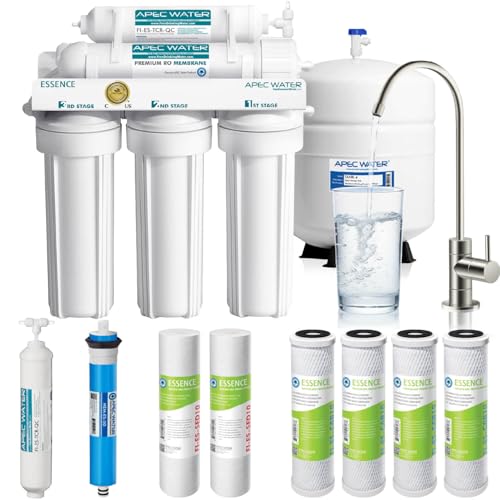
- Best overall: APEC ROES-50 - NSF 58, removes PFAS, lead, fluoride, 5-stage RO, low running cost
- Best for PFAS: Clearly Filtered Under-Sink - NSF 42, 53, 244, targets hundreds of contaminants
- Best carbon (no RO): Aquasana Claryum 3-Stage - NSF 42, 53, 401 - no tank - 15x flow
- Best remineralized RO: Aquasana OptimH2O - NSF 58, 401, 473 - adds minerals back
- Best budget tankless RO: Waterdrop D6 - NSF 58 - 600 GPD - 2:1 drain ratio
- Best premium + UV: Waterdrop X8 - NSF 58 - UV bacteria protection - 800 GPD
- USA assembled - domestic parts availability
- Tank-based, works without a pump
- Reduces PFAS, fluoride, lead, arsenic
- Tank-based only - no tankless option
- 50 GPD - slower than Waterdrop (600-800 GPD)
- 3-4:1 drain ratio - water waste
- No remineralization on the base ROES-50 (PH75 adds it)
Full review of the APEC ROES-50 →

- Maker lists testing against hundreds of contaminants, including PFAS, lead, fluoride and arsenic
- NSF 244 is the standard for microbiological reduction, which most under-sink filters skip

- Reduces PFAS, lead, pharmaceuticals
- No storage tank - instant flow
- Zero water waste - no RO membrane
- Does NOT remove fluoride
- Does NOT remove arsenic or nitrates
- Requires drilling for dedicated faucet
- Filter replacement every 6 months
Full review of the Aquasana Claryum 3-Stage →
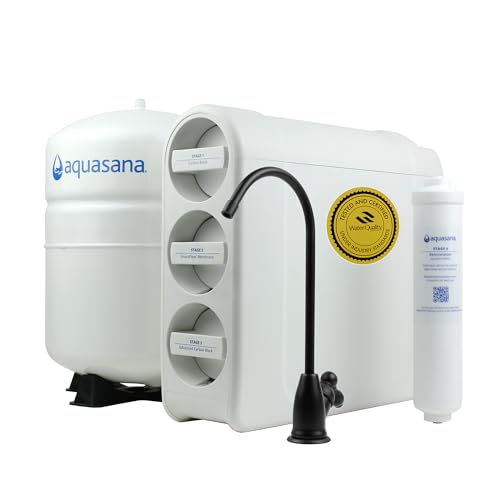
- Remineralization - better taste & pH
- NSF 401 is the standard for pharmaceuticals and hormones
- NSF 473 is the standard for PFOA and PFOS
- Higher running cost than APEC
- Higher upfront price than APEC
- Requires dedicated faucet (drill needed)
Full review of the Aquasana OptimH2O →

- 600 GPD - fast flow
- Reduces PFAS, fluoride, arsenic
- No smart TDS faucet
- 12-month filter life (vs 24 on X8)
- Requires electricity
- No remineralization
Full review of the Waterdrop D6 →

- UV sterilization - targets bacteria & viruses
- 800 GPD - fast on-demand flow
- Smart LED faucet with TDS display
- Highest price on this list
- Requires electricity under sink
- No remineralization
- UV bulb needs periodic replacement
Full review of the Waterdrop X8 →
Full comparison - 2026
Ranked by NSF certification and independent lab verification. Check the current price before buying.
| Model | PFAS | Lead | Fluoride | NSF | Cost tier | Buy |
|---|---|---|---|---|---|---|
| APEC ROES-50 | Yes | Yes | Yes | 58, WQA | Budget | Check price on Amazon ↗ (paid link) |
| Clearly Filtered Under-Sink | Yes | Yes | Yes | 42, 53, 244 | Low-mid | Check price on Amazon ↗ (paid link) |
| Aquasana Claryum 3-Stage | Yes | Yes | No | 42, 53, 401 | Low-mid | Check price on Amazon ↗ (paid link) |
| Aquasana OptimH2O | Yes | Yes | Yes | 58, 401, 473 | Mid | Check price on Amazon ↗ (paid link) |
| Waterdrop D6 | Yes | Yes | Yes | 58, SGS | Mid | Check price on Amazon ↗ (paid link) |
| Waterdrop X8 | Yes | Yes | Yes | 58, UV, SGS | Premium | Check price on Amazon ↗ (paid link) |
| Brita Under-Sink | No | No | No | 42 only | Budget | Brita review - why we don’t recommend it → |
How to choose an under-sink filter
NSF 58 covers reverse osmosis systems and PFAS removal. NSF 53 covers health-effect contaminants including lead. NSF 42 covers only taste and odor - not health contaminants. Never buy an under-sink filter with only NSF 42 if PFAS or lead are your concern.
Reverse osmosis systems (APEC, Aquasana OptimH2O) reduce the broadest range of contaminants including fluoride and arsenic. Non-RO carbon filters (Clearly Filtered, Aquasana Claryum) are faster and waste no water but generally don't remove fluoride. If fluoride removal matters, go RO.
A cheaper filter with expensive yearly cartridges can cost more over three years than a pricier one with cheap replacements. Calculate the 3-year total before buying. The APEC ROES-50 has the lowest certified running cost in this category.
All of these are designed for DIY installation under the kitchen sink. Expect 1-2 hours and basic plumbing comfort. RO systems require a dedicated faucet drilled through the sink; non-RO filters connect inline to your existing cold water line.
FAQ
Do under-sink filters remove PFAS?
How often do under-sink filters need replacing?
What is the difference between NSF 53 and NSF 58?
Do reverse osmosis systems waste a lot of water?
Can I install an under-sink filter myself?
Buying direct from the brand
Some of the makers on this page also sell the same systems on their own sites and run their own affiliate programs. We earn a commission from those links too, at no extra cost to you. Prices, bundles and warranty terms can differ from Amazon, so compare both before you buy.
- Aquasana Claryum 3-Stage Max Flow on Aquasana's own site ↗ (paid link)
- Waterdrop D6 on Waterdrop's own site ↗ (paid link)
- Waterdrop X Series X8 on Waterdrop's own site ↗ (paid link)
- Aquasana OptimH2O on Aquasana's own site ↗ (paid link)