Best Reverse Osmosis Systems 2026
Reverse osmosis is the most effective home water filtration technology available for PFAS, lead, fluoride, arsenic, nitrates and total dissolved solids. But not all RO systems are equal, and neither are their certificates. We read every system's NSF/ANSI 58 listing (they sit with IAPMO R&T and WQA rather than NSF itself) and compared real-world running costs and features.
Can't drill or plumb anything in? Countertop reverse osmosis systems covers fill-and-plug units, including the AquaTru Classic, whose listings name fluoride, lead, arsenic and PFOA/PFOS. Want no tank under the sink at all? Our tankless reverse osmosis systems roundup compares four, with what each listing names.
- Best overall / best budget: APEC ROES-50 - 5-stage RO, tank-based - lowest running cost - USA assembled Check price on Amazon ↗ (paid link)
- Best remineralized RO: Aquasana SmartFlow - adds minerals back Check price on Amazon ↗ (paid link)
- Best tankless RO: Waterdrop G3P600 - 600 GPD - 2:1 drain ratio - smart faucet Check price on Amazon ↗ (paid link)
- Best for fluoride: Any RO system - all three reduce fluoride; pitchers and carbon filters do not
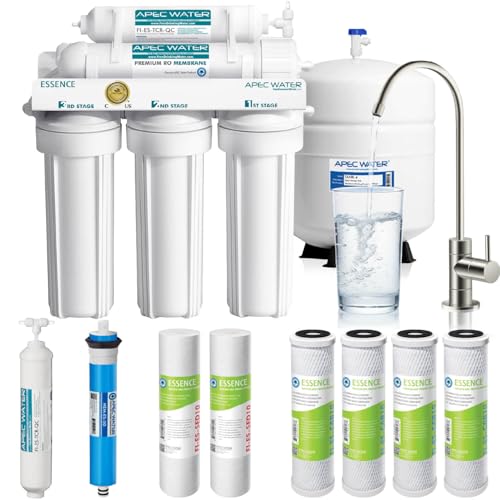
Get it if You want reverse osmosis at the lowest running cost and do not mind a tank under the sink.
Skip it if You need fast refills: 50 gallons a day is slow next to tankless systems, and the tank takes cabinet space.
- USA assembled - domestic parts availability
- Tank-based, works without a pump
- Maker lists PFAS, fluoride, lead and arsenic reduction
- Tank-based only - no tankless option
- 50 GPD - slower than Waterdrop (600-800 GPD)
- 3-4:1 drain ratio - water waste
- No remineralization on the base ROES-50 (PH75 adds it)
Full review of the APEC ROES-50 →
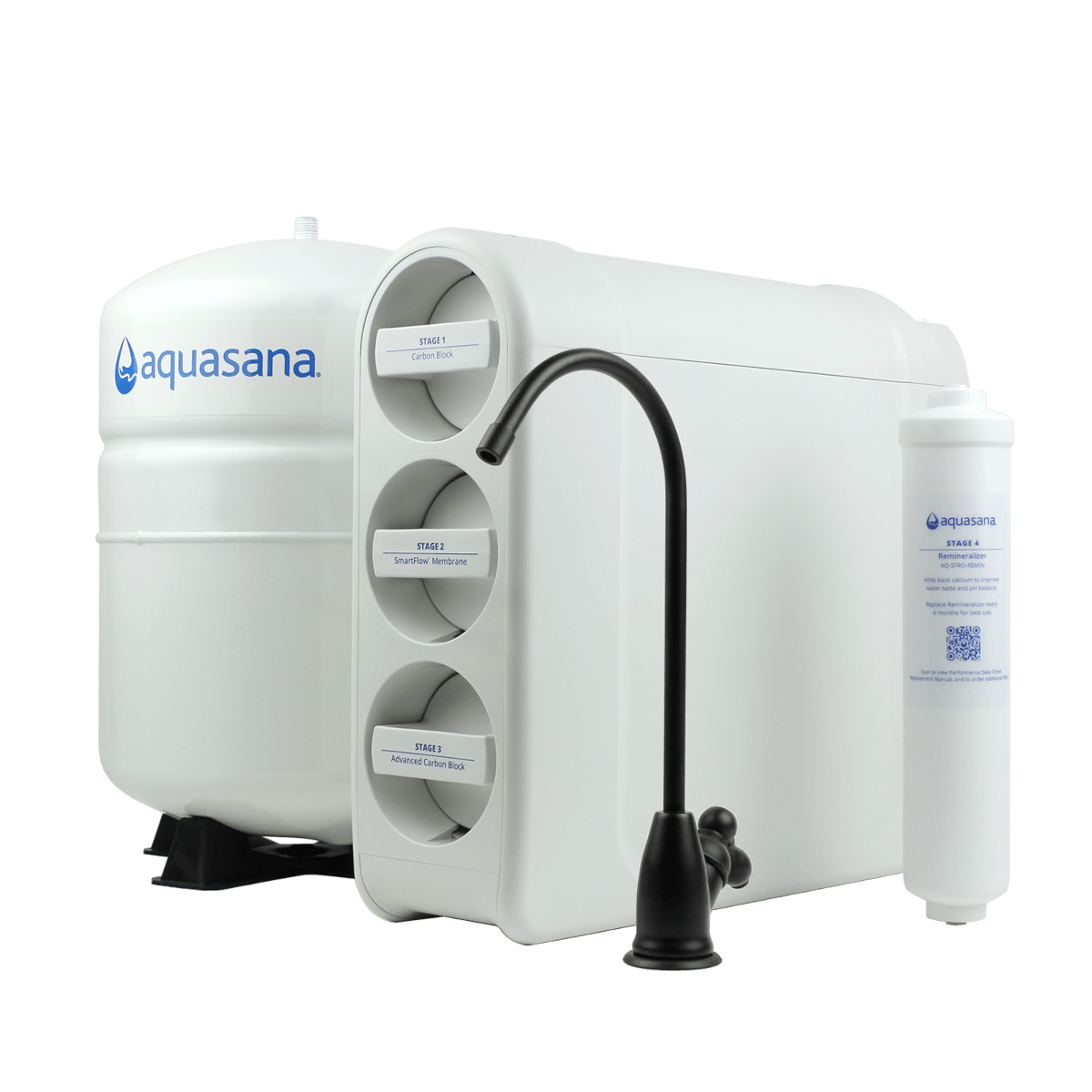
Get it if You want RO at the tap but dislike how flat pure RO water tastes.
Skip it if Cabinet space is tight, or you want the lowest running cost in this catalogue.
- Remineralizing last stage
- Listed for fluoride and arsenic V (NSF 58) and for lead and PFOA/PFOS (NSF 53)
- NSF 401 listing covers pharmaceuticals and microplastics
- Higher running cost than APEC
- Higher upfront price than APEC
- Maker says install means drilling into your pipes
Full review of the Aquasana SmartFlow →
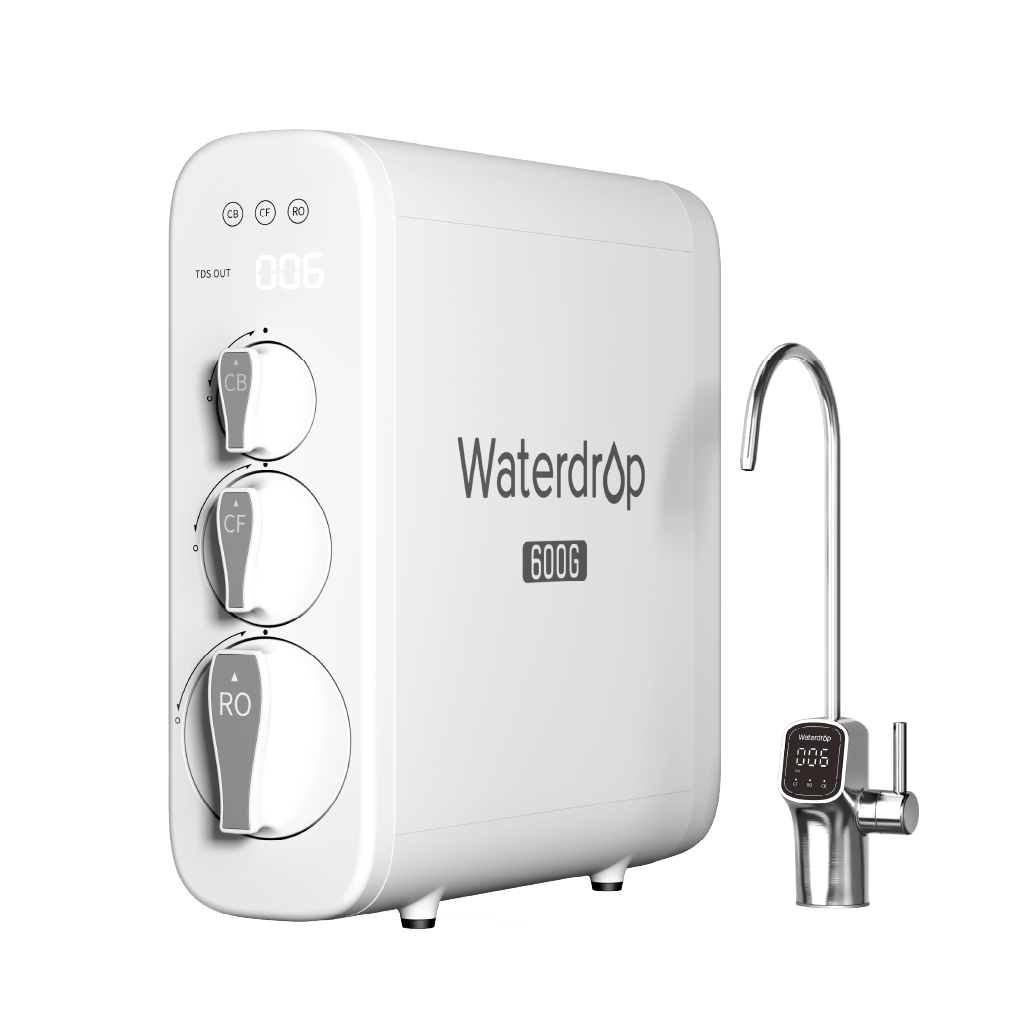
Get it if You refill jugs or bottles often and want RO without a storage tank.
Skip it if There is no outlet under the sink, or you want remineralized water out of the box.
- Tankless - saves space
- 600 GPD against 50 GPD on the APEC ROES-50
- TDS display confirms filtration
- Higher cost (Premium tier)
- Requires electricity
- No remineralization
Full review of the Waterdrop G3P600 →
Full comparison - 2026
All systems are NSF 58 certified. Choice depends on budget, tank vs tankless, and remineralization.
| Model | PFAS | Fluoride | Remineralizes | NSF certs | GPD | Cost tier | Buy |
|---|---|---|---|---|---|---|---|
| APEC ROES-50 | Not certified | Not certified | No | 58 (TDS only) | 50 GPD | Budget | Check price on Amazon ↗ (paid link) |
| Aquasana SmartFlow | Certified | Certified | Yes | 58, 53, 42, 401 | 25.7 GPD | Mid | Check price on Amazon ↗ (paid link) |
| Waterdrop G3P600 | Certified | Certified | No | 58, 53, 42, 372 | 600 GPD | Premium | Check price on Amazon ↗ (paid link) |
How to choose a reverse osmosis system
NSF 58 is the standard designed specifically for reverse osmosis systems. It verifies that the RO membrane reduces specific contaminants at claimed levels. Any RO system without NSF 58 has unverified performance claims. All systems on this list carry NSF 58 - that's the baseline requirement. What each listing covers differs: the APEC ROES-50's names TDS only.
RO reduces virtually everything - including calcium and magnesium that make water taste good. Standard RO water can taste flat or slightly acidic. If taste matters, the Aquasana SmartFlow's remineralization stage adds minerals back. If you just want the cleanest water at lowest cost, the APEC ROES-50 is the better value.
The APEC ROES-50 is the budget choice - lowest upfront and lowest running cost - but its certification covers TDS only. The Aquasana SmartFlow sits in the middle and adds remineralization plus listings that name fluoride, lead and PFOA/PFOS. The Waterdrop G3P600 is the premium, tankless option. Match the tier to what you actually need, not the highest spec.
Traditional tank-based RO systems (like the APEC) waste 3-4 gallons for every 1 gallon purified. For most households this adds only a few dollars a year to the water bill. If water efficiency is critical, look at tankless RO systems with 2:1 ratios like the Waterdrop G3P600 - though these cost more upfront.
RO vs other filter types
| Filter type | PFAS | Lead | Fluoride | Bacteria | Best for |
|---|---|---|---|---|---|
| Reverse Osmosis (RO) | Yes | Yes | Yes | No | Broadest contaminant removal, municipal water |
| Under-sink carbon | NSF 53 | NSF 53 | No | No | PFAS + lead without fluoride removal |
| Whole house filter | Partial | Yes | No | No | All taps, sediment, chlorine, iron |
| Pitcher filter | NSF 53 only | NSF 53 only | Most no | No | Budget, renters, low-volume use |